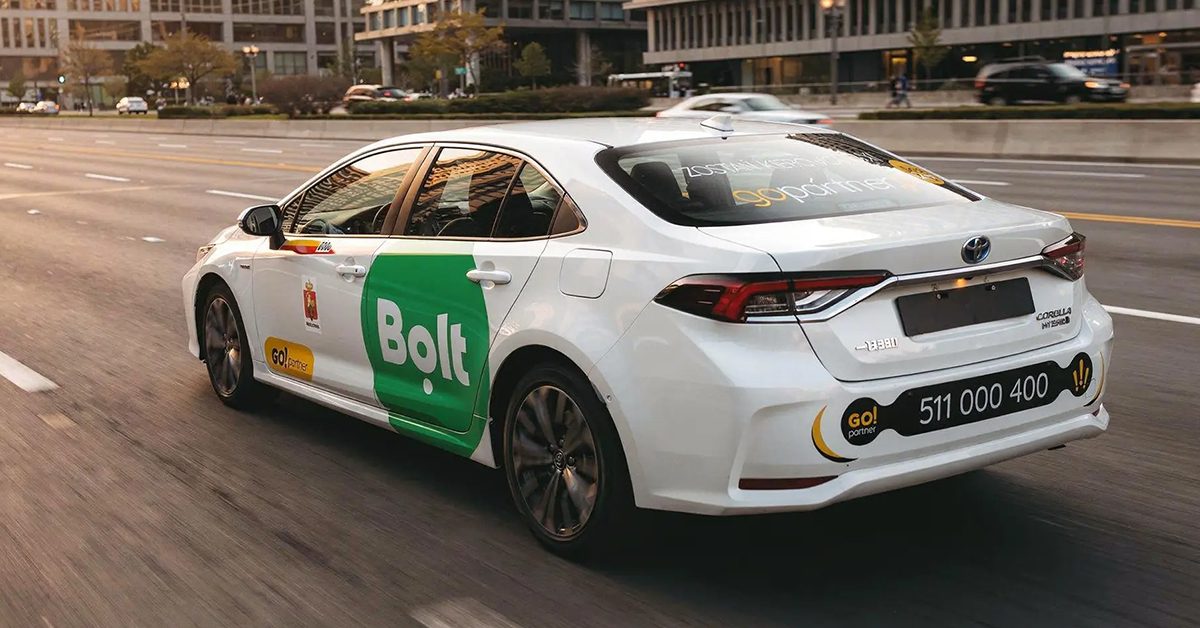
Working at Bolt continues to attract many people because of the flexibility it offers – you set your own hours and can treat it as either a side hustle or a full-time job. Is it possible to clearly define what Bolt earnings will look like in 2026? More and more drivers are realizing that it’s not a simple answer, but rather a mix of rates, costs, and how well you manage your daily work behind the wheel.
Your earnings depend on several key factors: the city you drive in, the number of hours per week, the times of day you catch rides, and how well you control your fuel and accounting costs. You can drive in such a way that you finish the month very satisfied, but you can also end up “chatting away” your time in the car and feeling that your pay doesn’t match your hours on the meter.
How much does a Bolt driver earn – the general picture
Let’s start with the main idea: Bolt driver earnings are variable, not “set in stone,” which means that two people in the same city can end up with completely different amounts. One driver mainly works when demand is high – evenings, weekends, near big events – and constantly gets rides, while another drives during slow hours and picks up only the occasional order.
Then there’s your work style: some people treat Bolt as a casual side gig for a few hours after work, while others turn it into a fully-fledged business and set up their schedule to maximize what the city has to offer. That’s why, when asked questions like “how much does a Bolt driver earn,” the answer is usually “it depends,” but there are certain patterns that can be clearly described.
Bolt driver – earnings vs. working hours
If you’re looking for an answer to “how much can you earn with Bolt,” the simplest way is to think in terms of different hourly scenarios.
Most often, it looks like this:
- Part-time driver
Treats Bolt as an additional source of income, does several short shifts per week, often in the evenings. In this model, every zloty counts because the goal is simply to top up your salary rather than drive to the max.
- Half-time driver
Drives regularly, but not necessarily every day – some days off, some longer shifts, usually a mix of rush hours and quieter times. For such people, it’s important not to waste time in the city, but to have a passenger in the car as often as possible.
- Full-time “serious” driver
A typical driver logged into the app 5–6 days a week, with longer days, hunting for peak hours and bonuses. This is really about managing your own small business – from scheduling to expenses.
How much does a Bolt driver earn – some starting numbers
To get a better handle on the topic, let’s break it down with some numbers based on real data from 2025:
- Average gross hourly rate: around 57–60 PLN gross nationwide, 60–65 PLN gross in large cities
- Average gross monthly revenue for full-time work: about 10,000–12,000 PLN in Warsaw, Krakow, or Wroclaw
- Actual net earnings (after app commissions and running costs): in practice, usually 20–40 PLN net per hour, depending on the city, car, and work style.
In practice, this means:
- With 40 hours of work per week and a reasonably efficient car, drivers aim for 5,000–7,000 PLN net per month, and the most savvy ones in large cities reach 8,000–10,000 PLN take-home after all costs.
- For “side gig” driving 20–30 hours a week, it’s usually a range of 2,500–4,500 PLN net per month.
These amounts are achievable in 2026 as well, as long as you don’t miss the key hours and keep your costs under control so they don’t eat up most of your earnings.
Bolt driver – earnings in different scenarios
Below you’ll find a simple table showing how Bolt earnings might look in typical hourly scenarios (based on 2025 data and real net ranges):
| Driver work style | Hours per week | Average gross revenue / month | Estimated net after costs |
| Full-time “serious” | 40–50 h | 10,000–12,000 PLN gross | approx. 6,000–10,000 PLN net |
| Part-time / side job | 20–30 h | 5,000–7,000 PLN gross | approx. 2,500–4,500 PLN net |
| Only weekends | 20–24 h / month | 2,500–3,000 PLN gross | approx. 1,500–2,500 PLN net |
Of course, these are ranges – someone who is glued to their phone, tracks multipliers, drives evenings and weekends, and knows the city well is almost always at the upper end of the range. On the other hand, people who drive during “dead hours” or pay high commissions and VAT due to poor accounting models fall into the lower values.
How much can you earn on Bolt in Warsaw?
Warsaw is a whole different level, with the most traffic, the most rides, and the biggest differences between a well-managed and poorly-managed schedule. Data from 2025 shows that in the capital:
- The average gross hourly rate was 60–65 PLN, with 15–25 rides per day.
- The average gross monthly revenue for a fully engaged driver was 10,000–12,000 PLN, with even more during peak periods (holidays, events, New Year’s Eve).
Most often, people say the level is around 8–10 thousand PLN take-home after all costs for a driver who:
- works in a big city,
- drives 5–6 days a week for 8–10 hours,
- catches multipliers and avoids “driving around empty”.
With such a volume of rides, every percent of savings starts to make a difference – this is exactly where drivers who don’t just go for the first available settlement model win. Instead, they choose solutions like a partner with 8% VAT for taxis (like our company), which lowers the real tax burden compared to the classic scenario.
How much does a Bolt driver earn net per hour?
Now that you know what the gross looks like, let’s move on to what everyone is interested in – how much can you actually get per hour. Analysis of driver earnings from 2024–2025 shows that:
- Real net rates most often range from 20 to 40 PLN per hour, after deducting commission, fuel, and basic costs.
- In large cities, when working during the most profitable hours (evenings, weekends, mass events), drivers get close to the upper end of that range.
So if someone does:
- 8 hours a day x 30 PLN net = approx. 240 PLN per day,
- 5 days a week = approx. 1200 PLN per week,
- 4 weeks = ~4800 PLN net per month with moderate commitment.
With a higher level of efficiency, longer days and dynamic driving in Warsaw, amounts of around 6000–8000 PLN net are realistic, and sometimes more. The key here is whether your costs are optimized and whether the fleet settlement model isn’t needlessly taking another percentage from you.
What influences Bolt driver earnings?
If you’re googling “how much does a Bolt driver earn” or “how much can you make on Bolt”, in practice you’re asking: “is it really worth it and how not to lose out?” Here are a few of the most important factors:
- City and season
In big cities (Warsaw, Kraków, Wrocław) there are more rides and higher rates, but the competition is also greater. Holidays, events, concerts, and sports matches have already pushed earnings up in 2025, and there’s no sign this will change in 2026.
- Working hours
Evenings, weekend nights, and rush hours pay best – this is when rates go up thanks to multipliers and the number of rides is highest. Driving during the “dead” hours in the middle of the day often drags the net average rate down.
- Car and driving style
An economical LPG car or a fuel-efficient diesel can leave you with hundreds of extra PLN per month compared to a fuel-hungry petrol car. Add to this smooth driving, avoiding empty runs, and sensible positioning for jobs.
- Settlement model, VAT, and partner
This is an element many people underestimate. Differences between fleet partner commissions, VAT calculations, and extra fees can eat up 500–1000 PLN a month from your results. Using a TAXI partner with 8% VAT and competitive conditions can make a real difference to your bottom line – this is exactly the model our company offers, working with Bolt and other app drivers in Warsaw.
Bolt Earnings 2026 – is it still worth it?
Looking at the cold hard numbers, the answer is: yes, but only if you approach it like a real business and not “let’s see what comes in”. The average gross hourly rate around 60 PLN and the possibility of earning 5000–8000 PLN net per month with full commitment is still solid money compared to many other jobs. On the other hand, there are also examples of drivers who, despite high mileage and poorly managed costs, ended up with just a few hundred extra after 200 hours of work in a month.
Which side of the table you end up on in 2026 mainly depends on:
- choice of city and working hours,
- car costs (fuel, service, tires, depreciation),
- commission and VAT rate,
- fleet partner and settlement model.
If you want to drive in Warsaw and take more from Bolt than you pay to the tax office and the app, it’s a good move to join through a TAXI partner with 8% VAT that offers the cheapest and best terms on the market – this is exactly how our company works. Thanks to this, it’s easier to keep your earnings near the top end, instead of wondering each month where those “promised” app funds disappeared to.